- Resources
- > Articles
Understanding Bengaluru’s emerging infrastructure corridors
Bengaluru rarely grows in a straight line.
The city expands through a combination of employment, roads, public transport, housing and social infrastructure. When several of these elements begin appearing around the same geography, a previously peripheral location can gradually become part of the city’s everyday urban network.
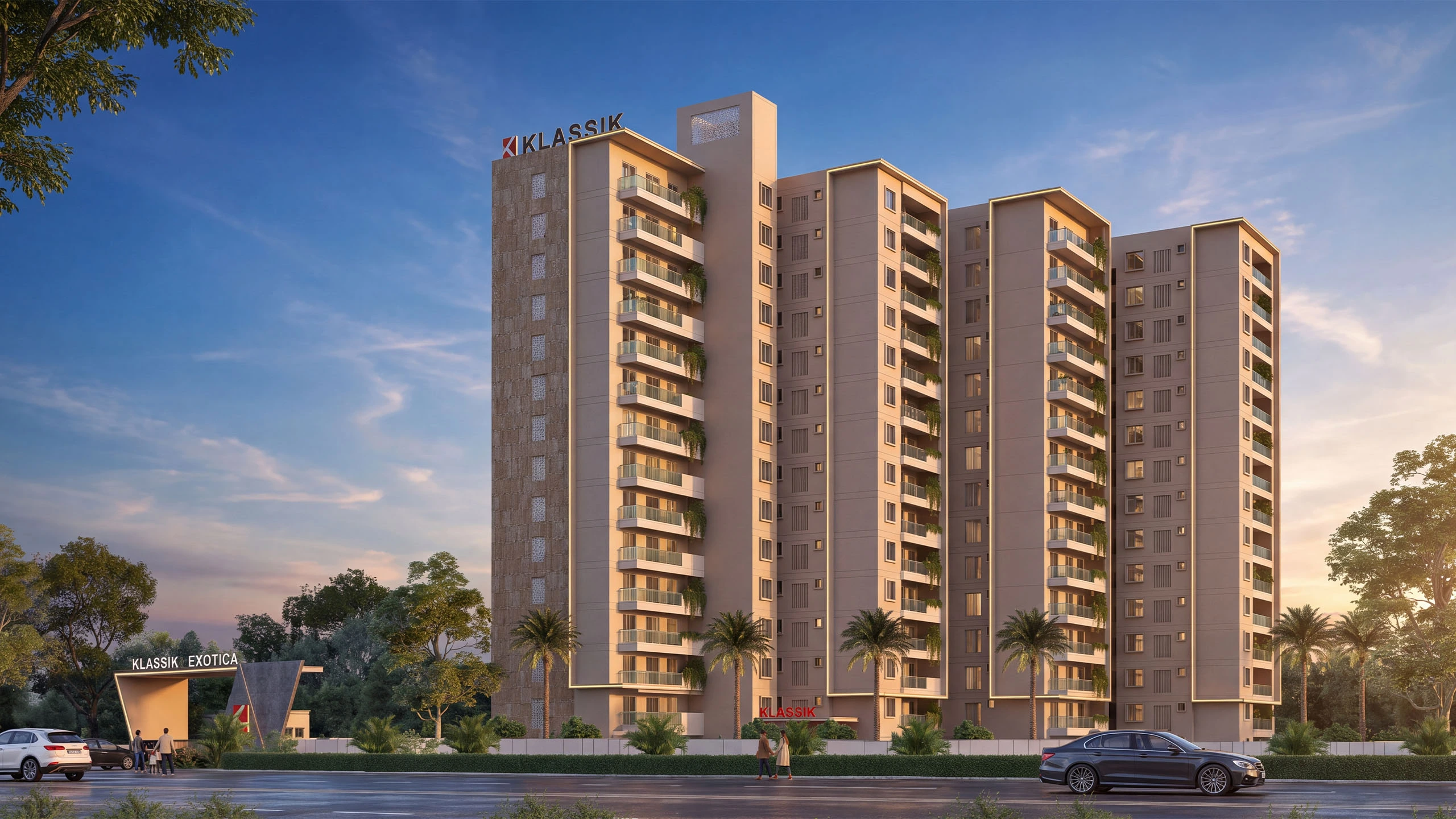
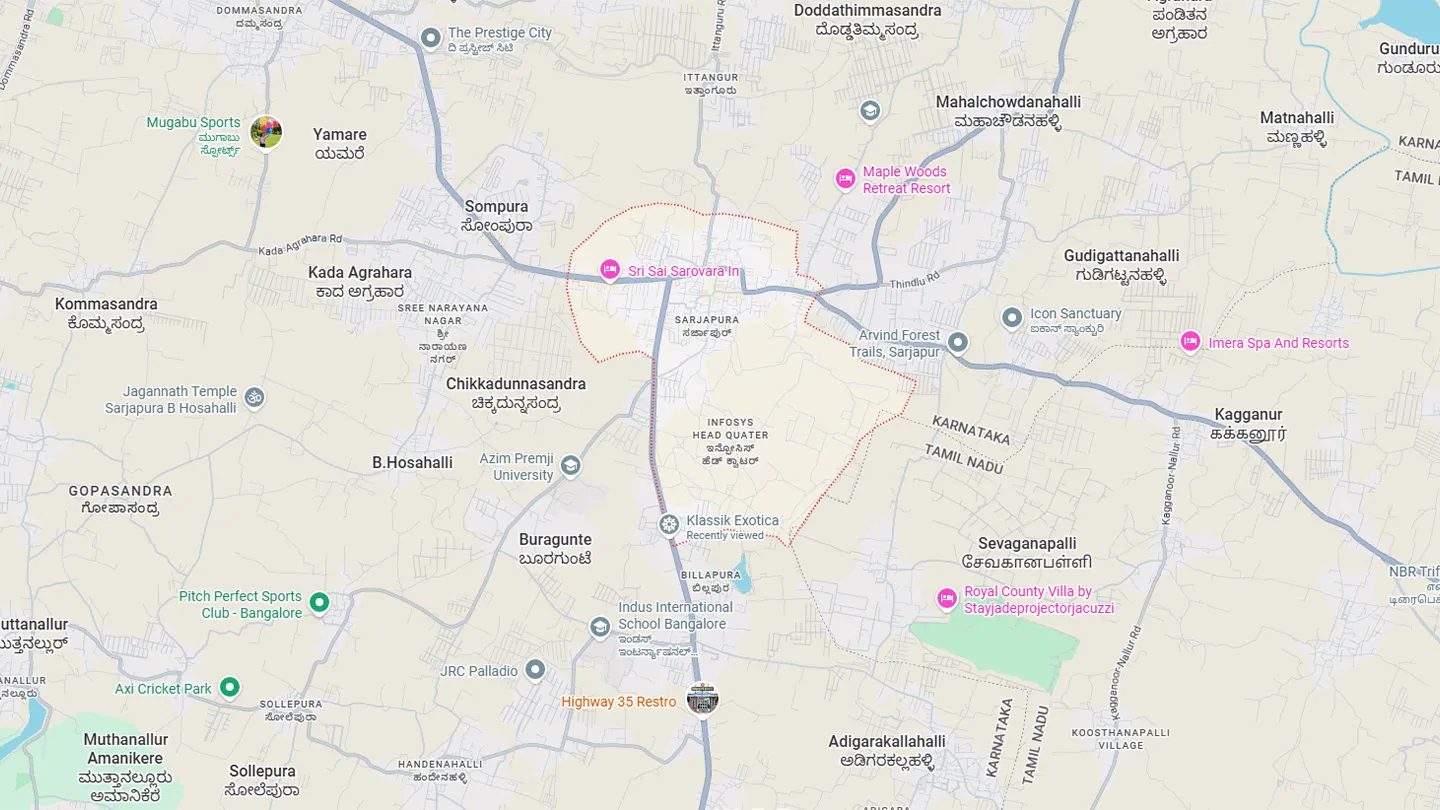
That is the basic idea behind an emerging infrastructure corridor. The Sarjapur–Attibele Road corridor is one such example, and it is increasingly relevant to residential developments such as Klassik Exotica.
Roads change the shape of cities
Roads are often the first visible layer of expansion.
New arterial roads, widening projects and ring roads can change how easily people move between residential neighbourhoods and employment centres. They can also redistribute traffic, making it possible to live farther from a workplace without necessarily becoming disconnected from the rest of the city.
Bengaluru’s Satellite Town Ring Road is one example of infrastructure planned at this scale. NHAI describes the STRR as a 179.969-km, six-lane highway across Karnataka and Tamil Nadu, intended in part to improve regional connectivity and separate through-traffic from Bengaluru’s internal road network.
For a homebuyer, the important distinction is between infrastructure that already exists, infrastructure under construction and infrastructure that is merely proposed.
Each carries a different level of certainty.
Metro changes accessibility
Mass transit can have an even broader effect because it changes the relationship between residential and employment areas.
The proposed Sarjapur–Hebbal Metro corridor illustrates this. Phase 3A is planned to connect Sarjapur and Hebbal over 36.59 km with 28 stations. Karnataka’s Economic Survey records the project and its proposed alignment, while current reporting notes that further central approval remains part of the process.
The lesson isn’t simply that “metro means appreciation”. It is that mass transit can expand the practical catchment of a neighbourhood by giving residents another way to reach employment, education and commercial districts.
Employment creates demand
Transport alone does not create a strong residential corridor.
People need reasons to travel there.
Technology parks, industrial clusters, universities, hospitals and large commercial developments create employment and daily footfall. Over time, housing tends to follow those employment centres because people generally value shorter and more predictable commutes.
The Sarjapur–Attibele corridor is interesting partly because it sits between multiple employment ecosystems. Sarjapur and the ORR technology belt provide one demand base, while Electronic City, Bommasandra, Jigani and the Hosur industrial belt provide another.
The planned SWIFT City initiative at Sarjapur adds another proposed employment catalyst, with the state planning an industrial district across more than 1,000 acres.
The bigger picture
When evaluating an emerging corridor, avoid looking at a single infrastructure project in isolation.
Instead, map four things: transport, employment, social infrastructure and housing.
Then ask what exists today, what is actually under construction and what remains a proposal.
A road without jobs may not create sustained housing demand. A job cluster without transport can remain difficult to access. A new residential market without schools, healthcare and retail can take longer to mature.
The strongest corridors are usually the ones where these layers begin reinforcing one another.
For buyers considering a home on Sarjapur–Attibele Road, this broader context matters. It helps explain why developments such as Klassik Exotica are being planned within a corridor that is still adding layers of connectivity, employment and social infrastructure.
For buyers, that is the real infrastructure story. Not simply what is being built, but how all the pieces could change the way a part of Bengaluru functions over time.
Key takeaways
- Infrastructure can signal where Bengaluru is expanding
- Employment centres create the underlying residential demand
- Transport expands a location’s practical catchment
- Existing, funded and proposed infrastructure should be assessed differently
- The strongest corridors combine connectivity, jobs and social infrastructure