- Resources
- > Articles
Why low-density communities feel different
Density is usually discussed as a number. How many homes fit onto a site? How many towers? How many floors?
For residents, however, density is experienced very differently.
It is the number of people sharing your lift in the morning. The number of doors opening into your corridor. How busy the swimming pool feels on a Sunday. How long you wait for a lift, a parking bay or a clubhouse facility.
That is why two communities of similar size can feel completely different.
Fewer neighbours, more breathing room
Low-density development changes the relationship between your home and the people around it.
With fewer residences, there is naturally less activity concentrated around each entrance, floor and shared space. That can create a quieter transition between private and community life.
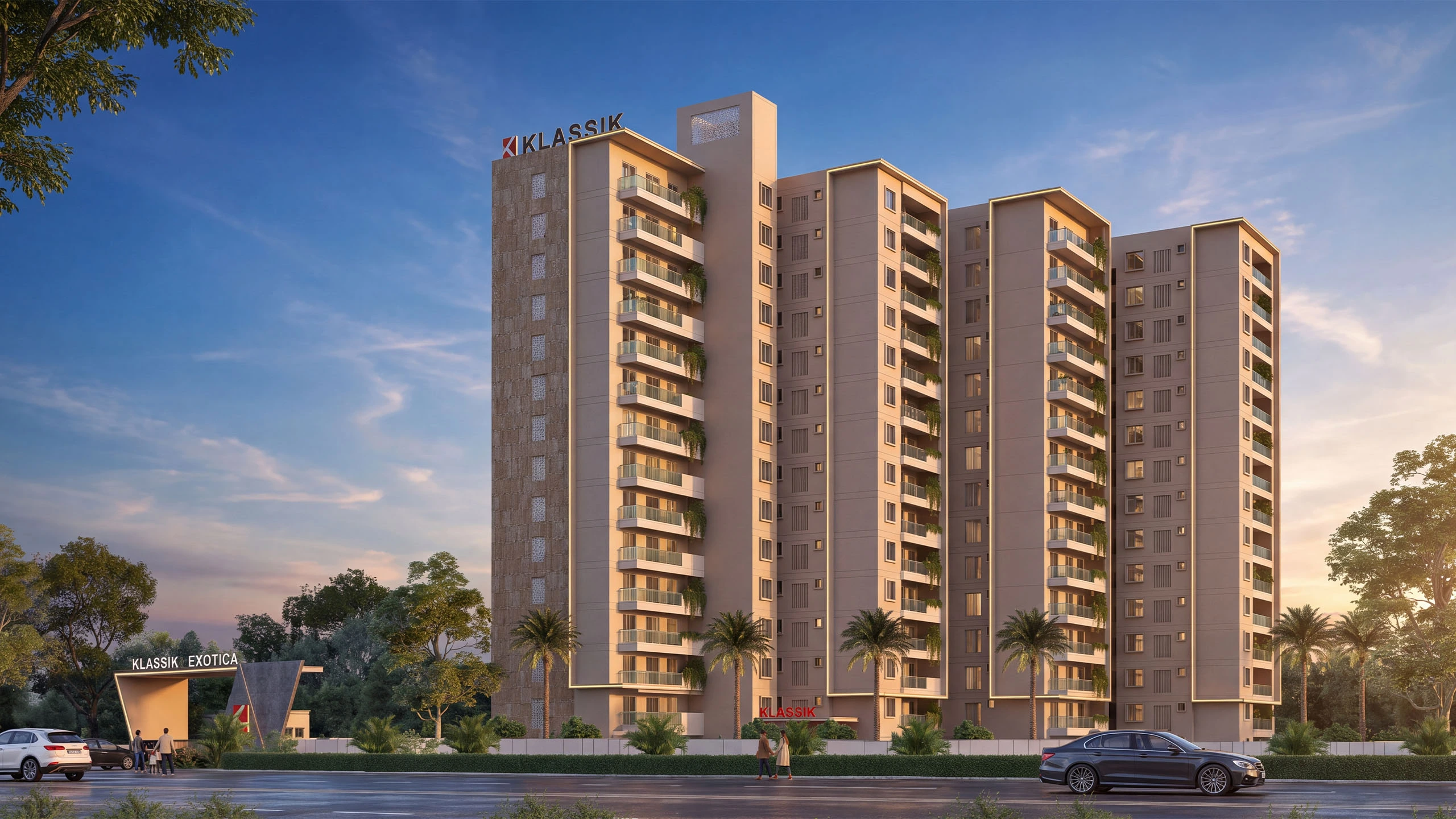
The effect is especially noticeable when the homes themselves are large. Generous residences paired with crowded floor plates can undermine the sense of space. A lower number of homes per floor allows the building to support a more private experience, which is one of the considerations behind the planning of Klassik Exotica.
Less waiting, less crowding
Shared amenities work differently depending on how many people use them.
A swimming pool, gym or games room may look impressive in isolation, but the real test is how it performs during peak hours. A community with fewer residents has the potential to make shared amenities more usable simply because demand is distributed across a smaller population.
The same principle applies to lifts and circulation.
This doesn’t mean every low-density community will automatically be uncrowded. Amenity sizing, tower planning and resident population still matter. But density is one of the first variables worth examining.
Privacy by design
Privacy isn’t only about distance.
It can be created through the arrangement of doors, corridors, lift lobbies, balconies and windows. A floor with four homes, for example, offers a very different experience from one with eight or ten.
The positioning of entrances matters too. If only a small number of homes share a lobby section, there is less foot traffic immediately outside the front door.
Open sides can make an equally significant difference. When homes are designed with independent aspects rather than relying heavily on shared walls, they can gain more natural light, ventilation and visual separation.
Low density therefore works best when it is supported by thoughtful design.
A community you can actually know
There is another benefit that numbers don’t capture.
Smaller communities can make it easier to recognise the people around you. You are more likely to see familiar faces at the pool, clubhouse or children’s play area. Neighbours can become people you know rather than simply the occupants of the apartment next door.
That sense of familiarity can be particularly valuable for families and older residents, while children benefit from growing up in an environment where the community feels more recognisable.
Low density isn’t about isolation. Done well, it creates the space for privacy while making genuine community easier.
For homebuyers comparing communities such as Klassik Exotica, looking beyond the overall unit count and understanding how density translates into everyday movement, privacy and shared spaces can be useful.
Key takeaways
- Lower density can create a more private everyday experience
- Shared amenities can feel more comfortable with fewer users
- Homes per floor influence privacy and circulation
- Smaller communities can encourage stronger social familiarity
- Good planning matters as much as the density number